

Understanding Gas-Insulated Switchgear (GIS) Components and Their Importance in Modern Power Infrastructure
Introduction
As urbanization, industrialization, and renewable energy adoption continue to accelerate worldwide, the demand for reliable and efficient electrical power infrastructure has never been greater. Power utilities, transmission companies, and industrial facilities require advanced systems capable of delivering electricity safely, efficiently, and with minimal maintenance.
One of the most significant innovations in modern electrical transmission and distribution networks is Gas-Insulated Switchgear (GIS). Compared to conventional air-insulated systems, GIS technology offers superior reliability, compact design, enhanced safety, and improved performance, making it an essential component of modern power infrastructure.
At the heart of every GIS system are precision-engineered Gas-Insulated Switchgear (GIS) Components, many of which are manufactured using high-quality aluminium casting and precision machining processes. As a leading Precision Aluminum Casting Manufacturer in India, Gescons (1961) Pvt. Ltd. supplies critical aluminium casting components designed to meet the demanding requirements of the power transmission industry.
What Is Gas-Insulated Switchgear (GIS)?
Gas-Insulated Switchgear, commonly known as GIS, is a high-voltage electrical equipment system that uses sulfur hexafluoride (SF6) gas or alternative insulating gases as the primary insulating medium.
Unlike conventional air-insulated substations, GIS systems enclose electrical conductors, circuit breakers, disconnectors, and other components within sealed metal enclosures filled with insulating gas.
GIS technology is widely used in:
- Power transmission substations
- Urban electrical networks
- Industrial power systems
- Renewable energy installations
- Offshore power facilities
- Metro rail infrastructure
- Data centers
- Power generation plants
Its compact design and superior reliability make it ideal for locations where space is limited and operational continuity is critical.
Why GIS Is Essential in Modern Power Infrastructure
Today's electrical networks face increasing challenges:
- Growing electricity demand
- Space constraints in urban areas
- Higher reliability requirements
- Increased renewable energy integration
- Greater focus on operational safety
GIS technology addresses these challenges by offering several key advantages.
Compact Design
One of the biggest benefits of GIS systems is their significantly smaller footprint compared to conventional air-insulated switchgear.
GIS substations can occupy up to 80% less space, making them ideal for:
- Urban substations
- Underground installations
- Industrial facilities
- Commercial developments
This space-saving capability has driven widespread adoption across modern infrastructure projects.
Enhanced Reliability
Power outages can have serious consequences for industries, businesses, and consumers.
GIS systems provide:
- Reduced exposure to environmental conditions
- Lower risk of insulation failure
- Greater operational stability
- Improved equipment longevity
These benefits contribute directly to enhanced grid reliability.
Improved Safety
Because critical electrical components are enclosed within sealed compartments, GIS systems significantly reduce the risk of:
- Electrical faults
- Flashovers
- Environmental contamination
- Human contact with energized parts
This makes GIS technology a preferred choice for high-voltage installations.
Lower Maintenance Requirements
Traditional air-insulated systems often require frequent inspections and maintenance.
GIS systems are designed for:
- Long service life
- Minimal maintenance
- Reduced downtime
- Improved operational efficiency
For utilities and industrial operators, this translates into lower lifecycle costs.
The Role of GIS Components in System Performance
The performance and reliability of a GIS installation depend heavily on the quality of its individual components.
Every component must meet stringent requirements for:
- Mechanical strength
- Electrical performance
- Corrosion resistance
- Dimensional accuracy
- Long-term reliability
This is where precision-manufactured aluminium castings become critical.
Why Aluminium Is Used in GIS Components
Aluminium has become one of the most preferred materials for manufacturing GIS components due to its unique combination of properties.
Excellent Strength-to-Weight Ratio
Aluminium offers high mechanical strength while remaining lightweight.
This provides several advantages:
- Easier installation
- Reduced structural load
- Simplified transportation
- Improved system efficiency
The lightweight nature of aluminium is especially valuable in large-scale power transmission projects.
Superior Corrosion Resistance
Electrical infrastructure often operates in challenging environments.
Aluminium naturally forms a protective oxide layer that resists corrosion and environmental degradation.
Benefits include:
- Longer component lifespan
- Reduced maintenance
- Improved reliability
- Better long-term performance
These characteristics are particularly important for outdoor substations and coastal installations.
High Precision Manufacturing Capability
Modern GIS systems require components with extremely tight tolerances.
Aluminum Alloy Castings combined with precision machining enable manufacturers to produce:
- Complex geometries
- Accurate dimensions
- Consistent quality
- Superior surface finishes
These factors are essential for ensuring proper assembly and reliable operation.
Excellent Conductivity
Aluminium offers excellent electrical and thermal conductivity, making it suitable for various power transmission applications.
This helps improve:
- Energy efficiency
- Heat dissipation
- System performance
- Equipment reliability
Critical Aluminium Components Used in GIS Systems
Modern GIS installations incorporate numerous precision-engineered cast and machined aluminium components.
Enclosures and Housings
GIS equipment relies on sealed enclosures that contain insulating gas and protect internal components.
These enclosures require:
- High structural integrity
- Corrosion resistance
- Precise dimensional accuracy
High-quality aluminium castings are widely used for these applications.
Connector Assemblies
Electrical connectors play a critical role in maintaining uninterrupted power flow.
Precision aluminium components ensure:
- Reliable electrical connections
- Mechanical stability
- Long-term durability
Manufacturing accuracy is essential to prevent performance issues.
Support Structures
GIS systems include various structural supports and mounting assemblies.
These components must provide:
- Strength
- Dimensional stability
- Vibration resistance
- Long service life
Precision cast aluminium components meet these demanding requirements.
Specialized Power Transmission Components
Many GIS systems incorporate custom-designed Power Transmission Components manufactured through advanced casting and machining processes.
These components contribute directly to:
- Grid reliability
- Operational safety
- System efficiency
Manufacturing GIS Components: From Casting to Precision Machining
Producing GIS components requires a combination of advanced manufacturing technologies.
Gravity Die Casting
Gravity Die Castings are widely used for GIS applications due to their superior mechanical properties.
Benefits include:
- Improved strength
- Better dimensional consistency
- Reduced porosity
- Enhanced surface finish
These characteristics are essential for critical electrical infrastructure.
Precision CNC Machining
Following casting, components often undergo CNC machining to achieve final specifications.
Machining ensures:
- Tight tolerances
- Accurate dimensions
- Precision mounting surfaces
- Reliable assembly
As a trusted High-quality CNC Machined Parts Manufacturer, Gescons provides precision-machined components designed for demanding industrial applications.
Surface Treatment and Finishing
Depending on application requirements, components may receive additional finishing processes such as:
- Shot blasting
- Surface coating
- Anodizing
- Protective treatments
These processes further enhance durability and corrosion resistance.
Quality Requirements for GIS Components
Because GIS systems are used in mission-critical electrical infrastructure, quality standards are exceptionally stringent.
Material Testing
Every aluminium alloy must meet strict specifications for:
- Chemical composition
- Mechanical properties
- Performance characteristics
Dimensional Inspection
Advanced measuring equipment verifies compliance with engineering drawings and customer requirements.
Even minor dimensional deviations can impact system performance.
Mechanical Testing
Components are tested for:
- Strength
- Hardness
- Durability
- Structural integrity
These tests ensure long-term operational reliability.
Non-Destructive Testing
Inspection methods help detect internal defects before components are installed in service.
This is particularly important for Aluminum Castings for Critical Applications such as GIS equipment.
GIS and the Future of Smart Power Grids
The global shift toward smart grids is increasing demand for advanced electrical infrastructure.
Future power networks require:
- Greater reliability
- Improved efficiency
- Enhanced monitoring capabilities
- Increased renewable energy integration
GIS technology plays a crucial role in supporting these objectives.
Applications include:
- Smart substations
- Renewable energy integration
- Urban transmission networks
- Industrial automation systems
As these technologies expand, demand for high-quality Gas-Insulated Switchgear (GIS) Components will continue to grow.
India's Growing Role in GIS Component Manufacturing
India has become a major manufacturing hub for electrical infrastructure components.
Leading Aluminum Die Casting Manufacturers India offer:
- Advanced manufacturing technologies
- Skilled engineering expertise
- International quality standards
- Cost-effective production
- Global export capabilities
This has positioned India as a preferred sourcing destination for power equipment manufacturers worldwide.
Why Choose Gescons (1961) Pvt. Ltd.
With more than six decades of engineering excellence, Gescons has established itself as a trusted supplier of precision aluminium castings for critical industrial applications.
Core capabilities include:
- Precision Aluminum Casting Manufacturing
- Gravity Die Castings
- CNC Machining
- Power Transmission Components
- Gas-Insulated Switchgear (GIS) Components
- Aluminum Castings for Critical Applications
- High-Quality Aluminum Alloy Castings
The company's commitment to quality, innovation, and customer satisfaction enables it to meet the demanding requirements of modern power infrastructure projects.
Conclusion
As electrical networks continue to evolve, Gas-Insulated Switchgear technology has become an essential component of modern power infrastructure. Its compact design, superior reliability, enhanced safety, and low maintenance requirements make it the preferred choice for utilities, industrial facilities, and infrastructure developers worldwide.
Behind every successful GIS installation are precision-engineered Gas-Insulated Switchgear (GIS) Components manufactured to the highest standards of quality and performance. Through advanced aluminium casting and CNC machining processes, manufacturers can produce components capable of meeting the demanding requirements of today's power transmission industry.
By partnering with an experienced Precision Aluminum Casting Manufacturer in India like Gescons (1961) Pvt. Ltd., power equipment manufacturers gain access to reliable, high-performance aluminium casting solutions designed for the future of electrical infrastructure.
Categories
- Precision Aluminium Castings in India
- Why Gescons is Trusted for Aluminium Castings in Critical Industries
- Gescons: Powering Critical Industries with Precision Aluminium Castings
- Gescons' Role in Import Substitution with High-Performance Aluminium Castings
- Aluminium Casting & Machining Insights
- Trusted Aluminium Castings for Critical Industries
- Import Substitution Aluminium Castings
- Aluminium Castings for Power & Energy Sector
- Quality, Testing & Certification in Aluminium Castings
- Advanced Foundry & Machining Capabilities
- Make in India & Import Substitution Manufacturing
- Custom & OEM Aluminium Casting Solutions
Recent Posts

28-05-2026
Why Global OEMs Are Looking to India for High-Quality Aluminium Alloy Castings

14-05-2026
CNC Machining and Aluminium Casting: The Perfect Combination for Precision Components
07-05-2026
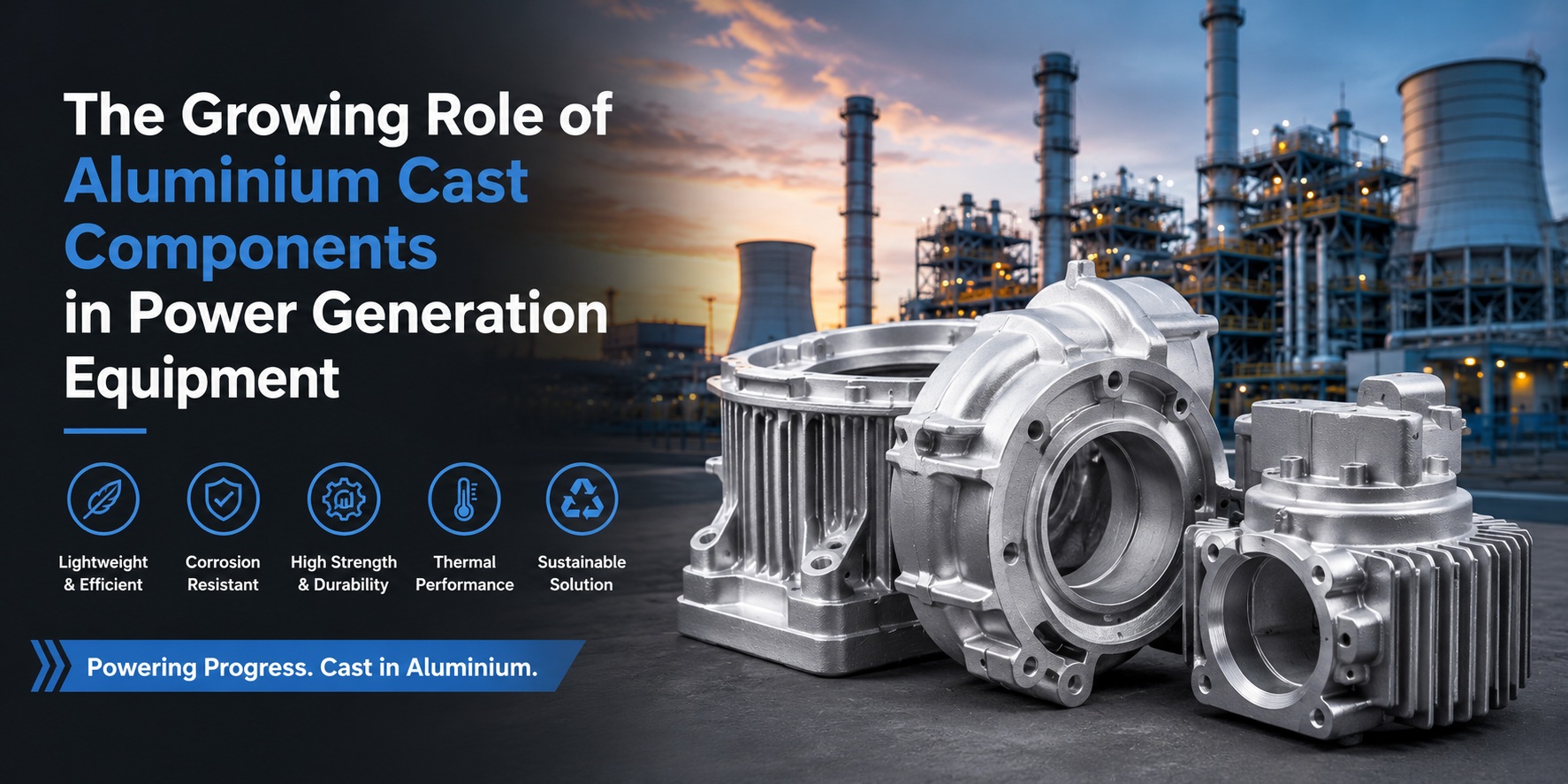
The Growing Role of Aluminium Cast Components in Power Generation Equipment

01-05-2026
How Aluminium Castings Improve Equipment Reliability in the Oil & Gas Industry

27-03-2026
Sustainable Manufacturing: How Aluminium Casting Supports Eco-Friendly Industrial Growth